当ブログではアフィリエイト広告を利用しています
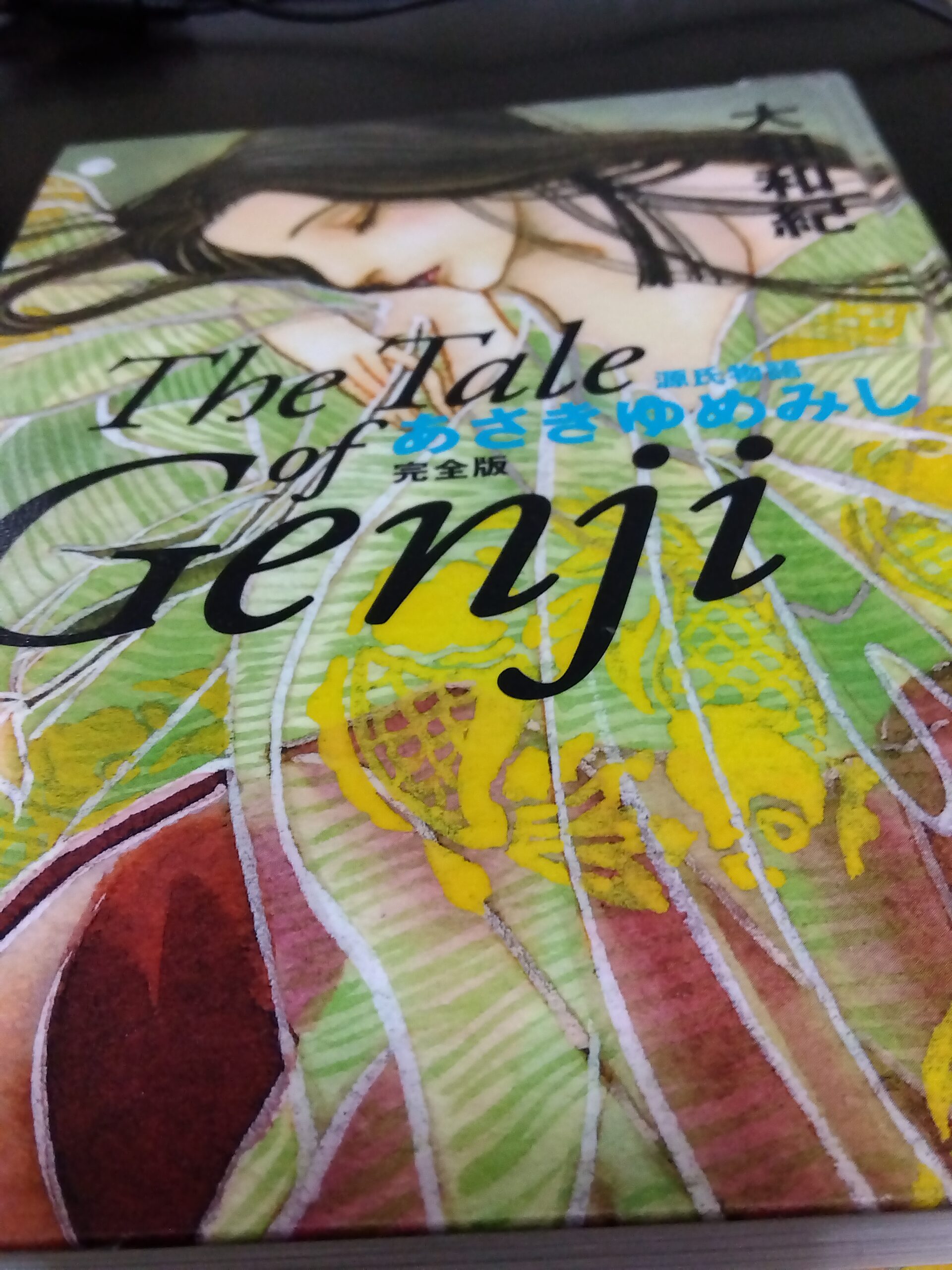
- 🌸あさきゆめみし・巻4(其の16〜21)感想
- English Version: 🌸 Asaki Yumemishi – Volume 4 (Chapters 16–21) Review
- The Birth of the Little Princess and Akashi no Ue’s Silent Agony
- 🛶 The Sumiyoshi Pilgrimage
- 🌸 Suetsumuhana’s Pure Devotion
- 🔥 A Love That Cannot Be Forgotten — Utsusemi
- 🎨 Ume-tsubo vs. Kōkiden — The Elegant Battle of Picture Contest
- 🌊 Akashi no Ue’s Pain
- 👑 The Death of Fujitsubo — Splendor and Loneliness
- 👑 Reizei Emperor’s Agony — Who Is My Father?
- ✨ Conclusion: A Story of Mothers, Children, and the Cruelty of Rank
🌸あさきゆめみし・巻4(其の16〜21)感想
ちい姫誕生と、明石の上の苦悩
ちい姫が誕生し、物語は一気に母たちの「身分」と「愛」の狭間へ。
明石の上は、娘を自分の手で育てられない運命に胸を裂かれるような思いを抱きます。
身分の低さゆえに、愛する娘を紫の上へ託さなければならない――この決断の重さが胸に刺さる。
紫の上もまた、泣き叫ぶちい姫を抱きながら、明石の上の痛みを理解していく。
“母になる”とは何か、“育てる”とは何か。
この巻は、女性たちの静かな苦しみがじわりと広がる章。
🛶住吉詣で
源氏の君は「御願ほどき」のため住吉へ参詣。
同じ日に、明石の君も船からその光景を見つめる。
雲の上のような世界に圧倒され、ただただ震える明石の君。
彼女の“場違い感”と“恐れ”が痛いほど伝わる。
夕霧は住吉でも相変わらず素直でまっすぐ。
遊女を見て父に「愛は売り買いするものじゃないよ」と諭された直後、
ぽつりと 「雲居の雁ちゃんとはそうなってもいいな」 と言い出す。
その言葉に、源氏の君は思わず絶句してしまい、
「おまえはおませだね」
と苦笑まじりに返す。
父としての驚きと、どこか微笑ましい気持ちが入り混じった瞬間。
読者としては「いや、あなたが言う?」と心の中でそっとつぶやきたくなる、
そんな静かな可笑しみがある場面。
🌸末摘花の一途な愛
崩れ落ちそうな屋敷で、ただひたすら源氏を待ち続ける末摘花。
その姿に、源氏の君は思わず胸を打たれる。
「たぐいまれな不器量な姫に…これはまたたぐいなき心のまことさよ」
容姿ではなく、ただひたむきな愛。
源氏が珍しく“心”で動く瞬間。
🔥忘れられぬ恋 ――空蝉
拒まれると燃える源氏の君。
亡き衛門の督の娘・空蝉は、両親を失い、生きるために伊予の介と結婚した女性。
源氏は偶然の方違えで彼女の家に泊まり、声を聞いた瞬間に忍び込むという暴挙。
空蝉にとっても“一度きりの恋”だったが、
彼女は妻としての立場を守り、拒み続ける。
この静かな強さが、源氏の心に長く残る。
🎨梅壺 vs 弘徽殿 ――絵合わせの優雅な戦い
後宮の地位争いは、表向きは静かで優雅。
梅壺と弘徽殿、どちらが中宮となるか――
その決着をつけるために行われたのが「絵合わせ」。
帝の御前で、両陣営が選りすぐりの絵を披露し合う。
そこには剣も怒号もない。
ただ、雅な筆の線と、静かな緊張だけが流れている。
勝敗はつけ難かったものの、
都を追われた須磨で源氏の君が描いた絵が、
その“深み”によって静かに場を制した。
争いでありながら、どこまでも優雅。
これこそが源氏物語の世界の残酷さでもあり、美しさでもある。
🌊明石の上の苦しみ
明石の上は、身分の低さゆえに娘を手放す。
母を求め泣き叫ぶちい姫を見て、紫の上は明石の痛みを理解する。
「母であること」と「身分制度」の残酷な交差点。
この巻の中でも最も胸が締めつけられる場面。
👑藤壺の宮の死 ――栄華の裏の孤独
藤壺の宮の言葉が胸を刺す。
「皇女として生まれ…栄華を極めたと思うだろう。
けれども、女人として、ただ一度の恋さえも拒み続けて…
生命を終えなければならなかったのだ」
彼女は本当に幸せだったのか。
母として、女として、皇族として――
どれも彼女を救わなかった。
👑冷泉帝の苦しみ ――“父”とは誰か
天変地異、太政大臣や女院の死。
「天子が父母への礼を失うと災いが起こる」とされる時代。
そして冷泉帝は知ってしまう。
自分が源氏の子であることを。
源氏に愛されて育った喜びと、
“父が臣下である”という恐怖。
帝としての責任と、ひとりの少年としての苦しみが交錯する。
✨まとめ:この巻は「母」と「子」と「身分」の物語
其の16〜21は、
女性たちの苦しみ、母としての愛、そして身分制度の残酷さ
が一気に押し寄せる巻。
明石の上、紫の上、藤壺の宮、空蝉、末摘花――
“愛してしまったがゆえに、身分や運命に翻弄されていく”
そんな姿が胸に残る。
愛はある。
想いもある。
けれど、それだけではどうにもならない世界。
彼女たちの苦しみは、
恋の迷いではなく、
生まれた時から背負わされた“逃れられない宿命”そのものだった。
📚 興味を持った方はこちらからどうぞ👇
![[商品価格に関しましては、リンクが作成された時点と現時点で情報が変更されている場合がございます。]](https://hbb.afl.rakuten.co.jp/hgb/3feb0509.1347d73d.3feb050a.65a4b5f6/?me_id=1213310&item_id=18312165&pc=https%3A%2F%2Fthumbnail.image.rakuten.co.jp%2F%400_mall%2Fbook%2Fcabinet%2F4033%2F9784062204033.jpg%3F_ex%3D240x240&s=240x240&t=picttext "[商品価格に関しましては、リンクが作成された時点と現時点で情報が変更されている場合がございます。]")

English Version: 🌸 Asaki Yumemishi – Volume 4 (Chapters 16–21) Review
The Birth of the Little Princess and Akashi no Ue’s Silent Agony
With the birth of the little princess, the story shifts into the emotional battlefield between love and social rank.
Akashi no Ue is torn apart by the fate that forces her to give up raising her own daughter.
Because of her low status, she must entrust her beloved child to Murasaki no Ue—a decision that cuts deeply into her heart.
Holding the crying baby, Murasaki no Ue begins to understand Akashi’s pain.
What does it mean to “be a mother”? What does it mean to “raise a child”?
This volume quietly unfolds the suffering of women bound by their roles.
🛶 The Sumiyoshi Pilgrimage
Genji visits Sumiyoshi Shrine to fulfill his vow.
On the same day, Akashi no Kimi watches from a boat, overwhelmed by the dazzling world of the capital.
Her fear, her sense of not belonging—every emotion reaches the reader.
Meanwhile, young Yūgiri remains earnest and straightforward.
After being told by his father that “love is not something to buy,”
he innocently murmurs, “But… I wouldn’t mind if it were with Kumoi no Kari.”
Genji is stunned, then laughs, “You’re quite precocious.”
A moment that is both fatherly and quietly humorous—
and one that makes the reader whisper, “Genji, you’re the last person who should say that.”
🌸 Suetsumuhana’s Pure Devotion
In her collapsing mansion, Suetsumuhana waits for Genji with unwavering loyalty.
Genji is moved by her sincerity:
“She may be unmatched in appearance… but her heart is unmatched in purity.”
For once, Genji acts from the heart, not desire.
🔥 A Love That Cannot Be Forgotten — Utsusemi
Rejected love only fuels Genji’s passion.
Utsusemi, now married to Iyo no Suke for survival, resists him with quiet strength.
Their single night together becomes a memory that haunts them both—
a love that could never be fulfilled.
🎨 Ume-tsubo vs. Kōkiden — The Elegant Battle of Picture Contest
The rivalry for the position of Empress unfolds not with swords, but with paintings.
In the refined tension of the picture contest,
the depth of the artwork Genji painted during his exile in Suma quietly dominates the room.
A battle that is elegant, yet cruel in its own way.
🌊 Akashi no Ue’s Pain
She must give up her daughter because of her rank.
Murasaki no Ue, holding the crying child, finally understands her sorrow.
A heartbreaking intersection of motherhood and social hierarchy.
👑 The Death of Fujitsubo — Splendor and Loneliness
Her final words pierce the heart:
“Born a princess, I seemed to have everything… yet I lived without ever accepting a single true love.”
Was she ever truly happy?
Neither her rank, nor her role as mother, nor her position as a woman saved her.
👑 Reizei Emperor’s Agony — Who Is My Father?
Natural disasters, deaths of high-ranking nobles…
In an age where “disrespecting one’s parents brings calamity,”
Reizei learns the truth:
Genji is his real father.
The joy of being loved, and the terror of having a father who is not of imperial rank—
his heart is torn between duty and identity.
✨ Conclusion: A Story of Mothers, Children, and the Cruelty of Rank
Chapters 16–21 reveal the quiet suffering of women whose love is constrained by status.
Akashi no Ue, Murasaki no Ue, Fujitsubo, Utsusemi, Suetsumuhana—
all are women whose love is sincere, yet powerless against fate.
Their pain is not about romantic confusion,
but about the inescapable destiny they were born into.
読んで下さってありがとうございます。
前回はこちらからどうぞ👇




📚 興味を持った方はこちらからどうぞ👇

コメント